
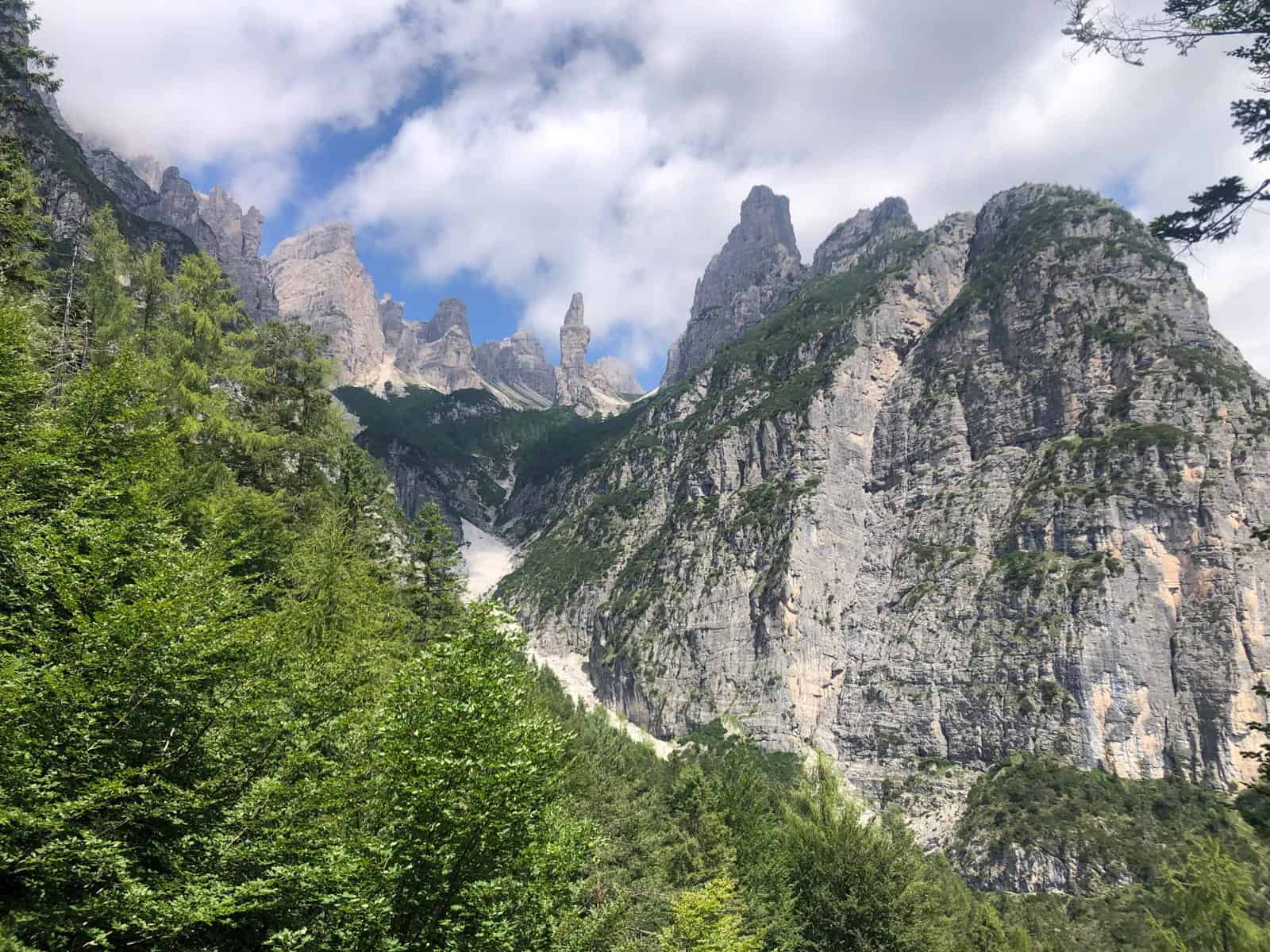
TRC Tourism Senior Consultant Debby van der Scheer reflects on a recent hiking trip to the Italian Dolomites.

On a recent trip to the Italian Dolomites with family and friends we tackled several hikes of varying difficulty. On one of the easier hikes, I found myself engrossed in conversation, completely oblivious to the trail markings and relying on others ahead to pause at junctions to keep us on the right path. Our attention diverted from navigation; we got semi lost. Fortunately, our hikes all ended well.
On other, more challenging outings – paying more attention and well prepared with maps, supplies and gear – I was amazed at how quickly conditions changed in the alpine environment.
But it got me thinking about how easily things can go wrong, especially in remote environments. How many stories don’t end so well? Which, as someone who works in the trail development space, led to wondering: has trail information, grading and management practices kept up with improved access, the increase in visitor numbers and the broader range of skill levels today? My 12-year-old son reckons you should need a license before hitting these trails 😊. And he may just have a point.

What level of risk is acceptable? How much is personal risk? And how much does a trail manager bear on behalf of those using the trails?
Are we adapting how we educate, manage, and grade trails to keep ‘adventurers’ who have a wide range of experience levels safe amid shifting demographics and new technology — while also protecting the environment and the local cultures of these places?
Firstly, are there more accidents on trail?
A quick scan shows yes.
In the Dolomites, annual rescue operations have leapt from around 8,000 before COVID to more than 12,000 a year today. In the UK, Mountain Rescue England and Wales has seen a 24% rise in callouts since 2019, with incidents among young adults nearly doubling.
Closer to home, the New Zealand Mountain Safety Council claims the number of people who go hiking in New Zealand has continued to increase over the last decade with a corresponding increase in search and rescue callouts and injuries.
In Australia’s state of Tasmania alone there were 446 rescue operations (n.b. all rescues) conducted over the 2023–24 period, up from 362 rescues in the previous year and up from 240 a decade ago.
And it’s not just hiking. Mountain biking numbers have also increased along with the number of incidents. In Australia, mountain biking numbers have doubled in the past six years. Added to this, the recent electric mountain biking (e-MTB) boom has changed the traditional mountain biker demographic and made remote trails more accessible to inexperienced riders.
The pattern is clear: the outdoor boom is real — and so are the consequences.
The rise can be attributed to several factors.
- Accessibility of information: apps like AllTrails, Trailforks, and Strava make trails look inviting — often without context about risks.
- Influencers: social media personalities and travel influencers encourage followers to visit iconic or challenging trails, sometimes downplaying risks for aesthetics.
- Inadequate preparation: a large share of hiking and biking accidents are due to inexperience, not checking local weather conditions and track updates, and inadequate footwear, gear, or navigation tools.
- E-bikes: the rise of e-MTBs means inexperienced riders can access harder, higher trails faster.
- Climate and environment: changing weather patterns mean faster shifts from sunny to deadly conditions. Global warming is changing environments – for example, drier conditions in the Alps is increasing the risk of rockfalls and unstable terrain.
- Volume – a rise in the number of trail users post-COVID: following lockdowns, hiking and biking participation surged globally as people sought outdoor activities, further increasing trail congestion and incidents.
Some more candid comments can be found on social media platforms:
“Since about one year ago, many people have begun to think everything on ChatGPT is correct. It is not a tool for mountain advice, for routes, or for planning.”
“Two weeks ago, I did two hikes to over 9000′. I was astounded at the number (most) folks who either had small bags, casual sneakers, no extra water, etc.”
“There are always going to be cycles of new tech related issues; the ChatGPT thing feels like the 2020’s version of people blindly trusting Google maps and driving themselves into a lake. But at the core of it, it’s inexperienced hikers/campers going out unprepared and getting themselves into trouble.”
“This is an age old process scientifically known as ‘natural selection.’”
Are current safety gradings and management adapting?
The traditional grading systems (like Italy’s Club Alpino Italiano trail ratings, New Zealand’s DOC track categories, Australia’s Walking Track Grading System (AWTGS), or systems using the International Mountain Bicycling Association’s (IMBA) trail difficulty ratings) were arguably designed for an audience that actively sought them out. Many of today’s hikers and bikers rely more on Google Map pins or Instagram reels than alpine club manuals. The information gap that represents is dangerous.
Added to this, many grading or classification systems are independent of contextual and variable factors such as the terrain condition (mud, ice), danger (risk of falling, avalanche), weather (wet, wind, fog and snow), and light conditions. Discrepancies in mountain bike trail gradings within a single country and between countries are also common.
The mountain biking-based Australian Trail Difficulty Rating System (based on the IMBA’s trail ratings) was updated in 2020 with changes including the addition of two new trail difficulty classifications and increases in trail gradient in the guiding assessment criteria.
What level of risk is acceptable?
Adventure will always carry risk. Every hiker and biker has a responsibility for their own choices. But when rescues drain public funds and local goodwill, it raises a fairness issue. How much should society subsidise personal recklessness? How much should an individual be liable for in dollar terms should their rescue be deemed as a result of irresponsible actions or reckless decisions? Who would be the judge of such and how would they decide what is and isn’t reckless?
It’s a grey area that often sparks online debate when a lost bushwalker hits the headlines. The January 2025 rescue of Hadi Nazari in NSW, Australia, caused plenty of debate when some estimates for his two week long rescue were put at up to AU$2 million.

Soccorso Alpino e Speleologico Veneto – CNSAS
What to do?
Some parks are already experimenting with entry fees, turnstiles, and reservation systems to manage flow and safety.
Restricting access clashes with the principles of free outdoor enjoyment and social equity. But when 8,000 people descend on a fragile trail in a single day because of an influencer (as reported near Lake Braies, Italy, in 2024), emergency departments with mountain bike crash victims, and search and rescue volunteers putting their lives on the line as the result of questionable individual decision making, notions of visitor caps, mandatory gear requirements, and speed restrictions on e-MTBs can start to look less nanny-state radical and more common sense necessity.
The Accident Compensation Corporation of NZ recently ran a campaign – ‘‘Have a hmmm moment before hitting our tracks – if in doubt, don’t go out’, and Trail Hiking Australia launched the THINK Before You Hike campaign to empower hikers with the knowledge and preparation needed for safe and enjoyable outdoor adventures…but are they reaching the right audiences?
How do we balance safety whilst keeping a sense of adventure:
- Education and realistic risk communication (hold influencers accountable 😊) through respective marketing organisations and park managers via social media, digital education campaigns, and booking systems
- Trail infrastructure – clearer and more standardised signage and warnings, and online information may need to be clearer, more visual, and multilingual
- Trail management – restrictions on numbers through entry fees and reservation systems, and the use of values-based trail management frameworks to assist with decision making
Or we make people sit a licence 😊