
What Happens When Perception Meets Reality?
– TRC Tourism’s Managing Director Kylie Ruwhiu-Karawana shares a powerful reminder
As a New Zealander working across Australia’s regions for many years now, I thought I had a fair sense of what to expect when I first travelled to East Arnhem Land. But stepping into Nhulunbuy has reminded me – again – that our assumptions rarely match the depth, the beauty, and the complexity of the places we are privileged to work in.
I arrived with limited understanding of this landscape and its people, and every day here continues to challenge and reshape me.
𝘛𝘩𝘪𝘴 𝘭𝘢𝘯𝘥 𝘪𝘴 𝘦𝘹𝘵𝘳𝘢𝘰𝘳𝘥𝘪𝘯𝘢𝘳𝘺
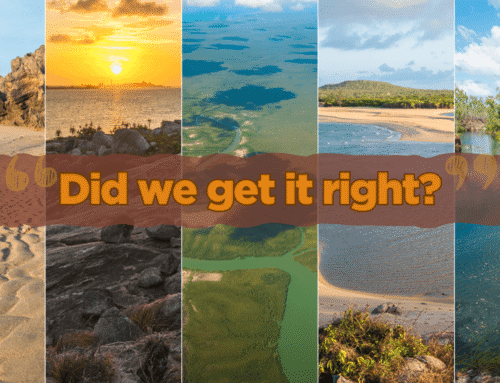
The red sands may make everything a little harder but more magical at the same time. The greenness of the country surprised me –the way the forests stretch for miles, the unexpected softness of the landscape when viewed from up high, and the sand dunes that appear suddenly on the horizon like a quiet reminder of the ancient forces at play here.
The skies change constantly, much like they do in the South Pacific. Clouds roll in and build faster than seems possible. Light shifts in a way that alters the entire mood of the land. And everywhere, country speaks – softly, powerfully, insistently.
But it’s the culture that makes sense of everything.
Understanding Yolŋu worldviews, stories and kinship systems is not just “cultural context” – it is the foundation for how tourism, land use, and community aspirations must be shaped here. Respect for this place cannot sit outside respect for its people. The way Yolŋu live, the way they see and feel the world, the way their past and future are interwoven – it is humbling, grounding and deeply familiar.
Because Indigenous communities around the world, despite their differences, share a common centre: People. Place. Past. Future. Guardianship. Continuity. Responsibility. Resilience.
What I’m learning—yet again—is that the role consultants, planners and tourism practitioners play is small in the grand story of a place. But how we play that role matters. Our responsibility is not metaphorical; it’s practical, ethical and immediate.
- To listen deeply.
- To set aside assumptions.
- To recognise that we are entering someone else’s home, someone else’s history, someone else’s future.
- To leave a positive imprint, not a scar.
Being here has encouraged me to look harder at how I work, what I prioritise, and how I contribute – to ensure that my impact, however small, is the right kind.
All of us working in tourism, planning and community development, have to honour the responsibility we step into when we work on lands and stories that are not our own. We need to consider what shifts to make – big or small – to ensure our impact genuinely uplifts the people and places we serve.